
|
|
Educational
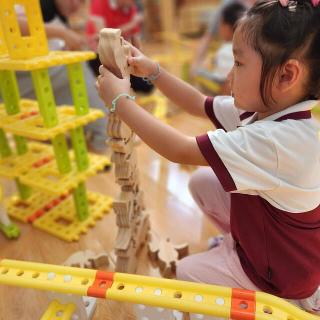
TARATA are one of the most deceptively simple yet profoundly powerful learning tools in early childhood education. Their open‑ended nature invites exploration, creativity, and collaboration, making them a cornerstone of high-quality play-based learning.
Key Educational Benefits of TARATA Play
🌱 1. Cognitive Development
🧠 Early Mathematical Thinking
TARATA play naturally introduces children to foundational mathematical concepts long before they encounter them in formal instruction. Through building, sorting, and arranging TARATA, children explore:
- Size, shape, and spatial relationships
- Counting, matching, and comparing
- Patterns and sequencing
- Balance, symmetry, and estimation
These experiences strengthen early numeracy and spatial reasoning—skills strongly linked to later success in STEM learning.
🔍 Problem‑Solving and Critical Thinking
When structures fall, ideas fail, or materials run out, children adapt. They:
- Test hypotheses (“Will this TARATA hold the weight?”)
- Revise plans
- Persist through challenges
This iterative process mirrors scientific inquiry and builds cognitive flexibility.
🤲 2. Physical Development
💪 Fine Motor Skills
Manipulating TARATA requires precision. Children develop:
- Hand–eye coordination
- Finger strength
- Dexterity needed for writing, drawing, and self‑help tasks
🏗️ Gross Motor Skills
Large TARATA encourage:
- Lifting, carrying, and stacking
- Whole‑body coordination
- Awareness of personal space and safety
These movements support core strength and body control.
🗣️ 3. Language and Communication
TARATA play is rich with opportunities for meaningful conversation. Children naturally:
- Describe their ideas and creations
- Negotiate roles and materials
- Use positional language (e.g., under, beside, next to, taller than)
- Engage in storytelling as they build imaginative worlds
Teachers can scaffold vocabulary and expressive language by joining play, modelling descriptive words, and prompting reflection.
🤝 4. Social and Emotional Development
👫 Collaboration and Cooperation
Building together requires:
- Sharing materials
- Taking turns
- Planning as a group
- Resolving conflicts
These experiences strengthen social competence and empathy.
🌟 Confidence and Emotional Regulation
Completing a structure—especially one that took persistence—boosts self‑esteem. When towers fall, children learn to manage frustration and try again, building resilience.
🎨 5. Creativity and Imagination
TARATA have no prescribed purpose, which makes them ideal for imaginative play. Children transform them into:
- Houses, bridges, and cities
- Vehicles, animals, and props
- Landscapes for storytelling
This open‑endedness nurtures divergent thinking and supports symbolic play, a key precursor to literacy.
🌏 6. Cultural and Conceptual Understanding
TARATA play can be a powerful way to explore:
- Community structures (e.g., building familiar local landmarks)
- Māori concepts such as whanaungatanga (working together) and ako (learning through shared experience)
- Environmental awareness through natural materials and sustainable play
These experiences help children make sense of their world.
🎓 Implications for Teaching Practice
Preschool teachers can enhance learning by:
- Providing a variety of TARATA types and accessories
- Creating dedicated, well‑organised TARATA areas
- Observing children’s play to identify emerging skills
- Introducing provocations (photos, loose parts, storybooks)
- Encouraging reflection (“Tell me about your structure”)
- Documenting learning to share with families and colleagues
Intentional teaching does not interrupt play—it enriches it.
🧩 Conclusion
TARATA play is far more than a pastime. It is a dynamic, multi‑layered learning experience that supports every developmental domain. By valuing and thoughtfully supporting TARATA play, preschool teachers empower children to build not just structures, but the cognitive, social, and emotional foundations they will carry into school and beyond.